
In the whirlwind world of tech, there’s always something new grabbing headlines. But few innovations have stirred as much curiosity—and controversy—as undress AI tools.
These aren’t your everyday image editors; they’re AI-powered marvels pushing the boundaries of what’s possible in digital imagery. Whether you’re intrigued, skeptical, or somewhere in between, it’s worth peeling back the layers to understand what this tech really offers.
Imagine walking into a gallery where every portrait shifts as you look at it—layers revealing hidden dimensions, all powered by mysterious intelligence.
That’s what undress AI tools are doing for the digital space. They’re redefining visual storytelling, art, and even how we perceive privacy in the age of machine learning. In this post, we’ll dive into the transformative potential, ethical implications, and leading platforms in this space.
1. What Are Undress AI Tools, Really?
Let’s cut through the buzz: undress AI tools use deep learning to simulate clothing removal in photos, typically for research, artistic, or entertainment purposes. Researchers train these models on large datasets. They use pattern recognition and statistical inference to predict what lies beneath clothing.
While that might sound like science fiction, it’s built on the same technology behind face-swapping apps, deepfake videos, and virtual try-on tools in fashion e-commerce. The key difference? Undress AIs flirt with taboos, making them both fascinating and fraught.
🛠️ Tip: Before exploring these tools, understand the legality and ethics in your jurisdiction. Consent is king.
“The power of AI should always be balanced with responsibility,” says Fei-Fei Li, professor of computer science at Stanford and leading AI ethics advocate.
2. The Rise of AI in Visual Storytelling
From film post-production to Instagram filters, AI has revolutionized how we create and consume images. What used to take hours in Photoshop now takes seconds, thanks to automation and AI.
Undress AI fits right into this evolution, offering hyper-realistic transformations. Artists use it to explore body form, digital fashion developers use it for avatar creation, and adult content creators—well, you can guess. While its uses are niche, they’re growing steadily.
A recent report by Statista projects the global AI image processing market will surpass $38 billion by 2030. That includes everything from object recognition to, yes, simulated image transformations.
3. Spotlight on the Best AI Undress Tools
With the growing interest, several platforms have emerged, claiming to offer the most accurate and ethically sound experiences. But not all are created equal. That’s where curated lists come in handy.
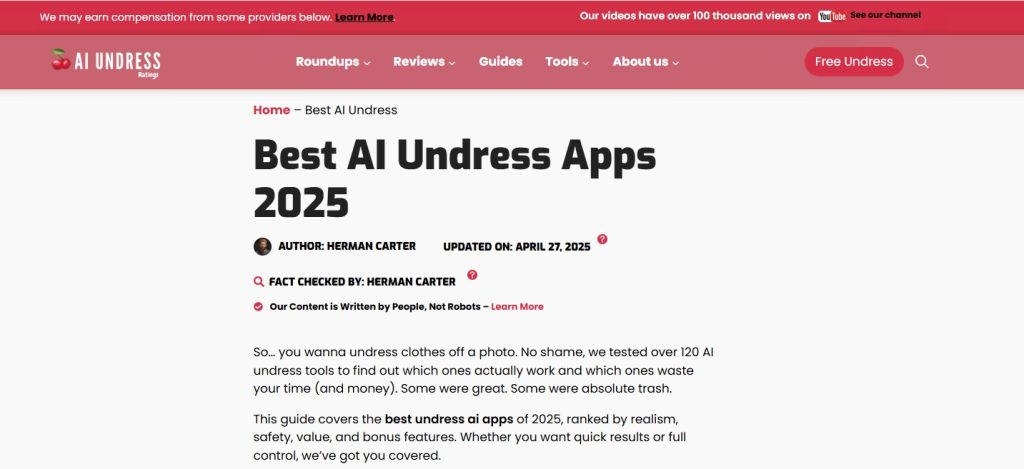
One standout resource is this list of the best ai undress tools, offering an in-depth comparison of features, performance, and limitations. It’s a go-to guide whether you’re curious or seriously considering integrating such tech into your workflow.
These tools vary in realism, user interface, and policies around consent and image safety. Always look for platforms that prioritize ethical use and clear user agreements.
🔍 Tip: Choose tools with watermarking and user verification to minimize misuse.
4. Where It’s Headed: From Novelty to Norm
Today’s undress AI is tomorrow’s mainstream tech—just like face filters or virtual backgrounds once seemed exotic.
As machine learning models become more sophisticated, expect real-time transformations, integration with AR/VR, and even body-aware clothing design in gaming or fashion.
The frontier is wild, but it’s being tamed. Companies are investing in AI moderation tools to prevent misuse, and some are even developing blockchain-based tracking to trace image
5. Ethics and Consent: Drawing the Line in Digital Sand
Let’s not sugarcoat it: undress AI walks a fine ethical line. Used responsibly, it’s a creative aid. Used maliciously, it’s invasive and harmful. The difference lies in consent and intent.
Ethical developers are building safeguards, like restricting uploads to verified users or requiring model releases. But enforcement is tricky. The real solution? Public awareness and digital literacy.
A 2023 Pew Research survey found that 63% of adults are concerned about AI-generated content being used to manipulate or deceive. That’s a wake-up call.
⚖️ Tip: Always seek consent before editing or sharing any AI-altered images. Just because you can doesn’t mean you should.
Final Thoughts: Handle with Care, Create with Curiosity
Undress AI tools are like fire—brilliant when used responsibly, dangerous when handled recklessly. They open up fascinating new avenues in art, storytelling, and design. But they also challenge us to rethink privacy, consent, and the limits of digital creativity.
If you’re diving into this space, be informed, be ethical, and be creative. The future is wide open—and how we use these tools will shape the digital landscape for years to come.
🔥 Stay curious, but tread carefully. Innovation thrives best when guided by integrity.